

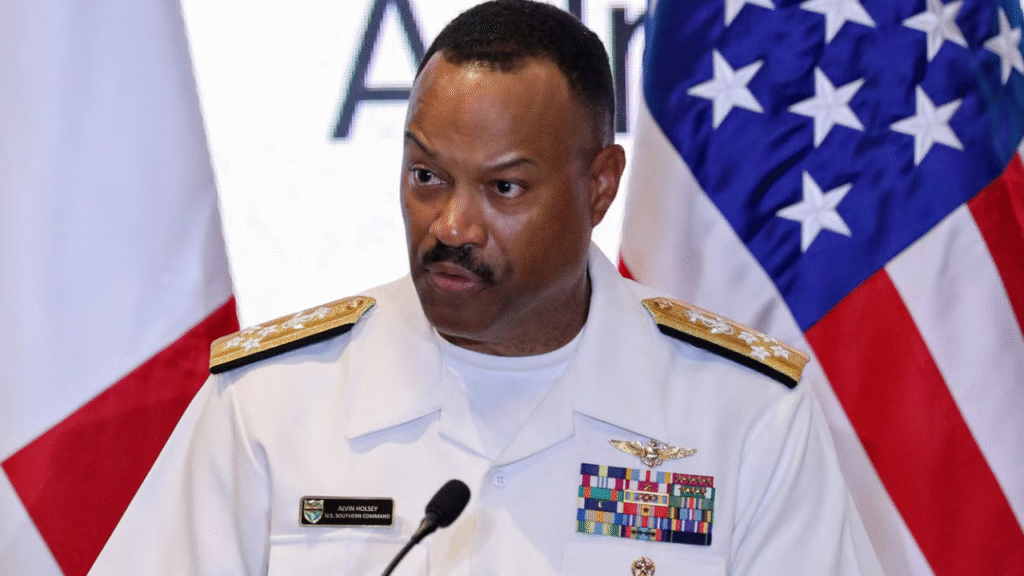
U.S. Defense Secretary Pete Hegseth forced the resignation of Admiral Alvin Holsey, head of U.S. Southern Command, after Holsey raised legal concerns about lethal strikes on alleged drug boats in the Caribbean, according to multiple reports. Holsey’s departure came after months of tension with Hegseth, escalating when the Trump administration initiated bombing campaigns targeting drug traffickers’ vessels in the region.

Clash over legality and command
Admiral Holsey reportedly objected to aspects of the operation, citing unclear legal authority and concerns that parts of the mission fell outside his direct control due to fragmented military oversight. Hegseth grew frustrated with what he saw as Holsey’s hesitance and slow pace in combating drug trafficking, pushing for more aggressive actions.
Controversy and accusations
The strikes, which have killed more than 80 people, have drawn accusations of potential war crimes from some lawmakers and experts. Hegseth has denied these claims, calling them “fabricated and inflammatory.” White House officials defended the strikes as lawful under U.S. and international law and approved through military and civilian legal channels.
Political and strategic fallout
Holsey’s exit amid an ongoing military operation was described as “shocking” by former Pentagon officials. The dispute highlights growing political and operational pressures as the U.S. ramps up counter-narcotics efforts in the Caribbean while navigating legal and ethical debates. Senator Chuck Schumer publicly criticized Hegseth and demanded full transparency including testimony and release of strike videos to Congress.
Continuing military campaign
Defense Secretary Hegseth has continued to authorize strikes, praising commanders who take decisive action against traffickers despite the controversy. Navy Admiral Frank Bradley, for example, led a follow-up strike that successfully sank a suspected drug vessel, an action Hegseth fully endorsed.
The unfolding dispute between civilian leadership and military commanders underscores the challenges in executing complex operations that blend law enforcement and armed conflict in politically sensitive environments. The Caribbean campaign is seen by Pentagon officials as a central front in the fight against drug smuggling into the United States.