

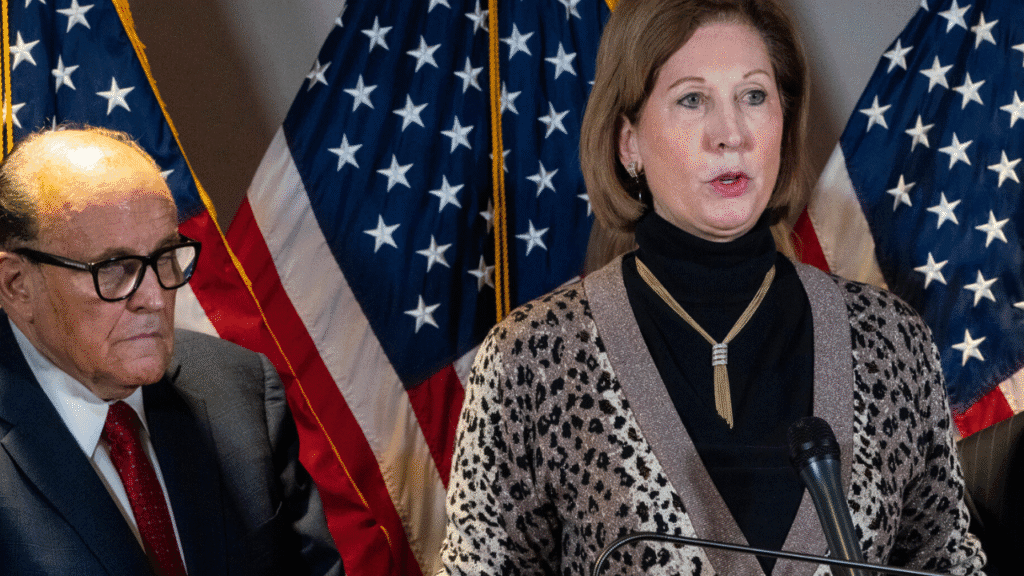
President Donald Trump has issued a sweeping series of federal pardons to prominent allies and supporters facing legal repercussions for their roles in challenging the 2020 presidential election results. The announcement, delivered late Sunday by Ed Martin, the Justice Department’s Pardon Attorney, confirms clemency for a list that includes Trump’s longtime lawyers Rudy Giuliani and Sidney Powell, as well as former White House Chief of Staff Mark Meadows, several co-defendants in Georgia, and other figures tied to the post-election efforts.

Pardons Target Election-Related Offenses
Described by Trump as a remedy to “national injustice,” the full, unconditional pardons come after sustained legal and political battles focused on the aftermath of the 2020 election. The official proclamation, dated November 7 and signed by Trump, says the pardons are intended to “further the journey toward national healing” and address what Trump called unfair prosecutions of those defending his election claims.
However, these federal pardons do not remove liability for state or local offenses, leaving some recipients—including several indicted in Georgia—still facing ongoing charges. The document makes clear that the clemency does not apply to Trump himself, who remains a central figure in several ongoing investigations and lawsuits.
More Pardons and National Response
In a related development, Trump also pardoned a New York police officer convicted of stalking a New Jersey family for the Chinese government, as well as former Major League Baseball star Darryl Strawberry over tax evasion charges from 1995. The breadth of the proclamation has triggered renewed debate about the limits of presidential power and the precedent of pardoning political allies accused of undermining democratic processes.
Legal experts expect further scrutiny as the Justice Department, congressional leaders, and state investigators assess the scope of the pardons and any additional legal challenges that might arise. The White House and the Pardon Attorney’s office have yet to comment on the broader implications, but Trump’s move underscores the continuing polarization around the legacy of the 2020 election and accountability for actions taken in its aftermath.