

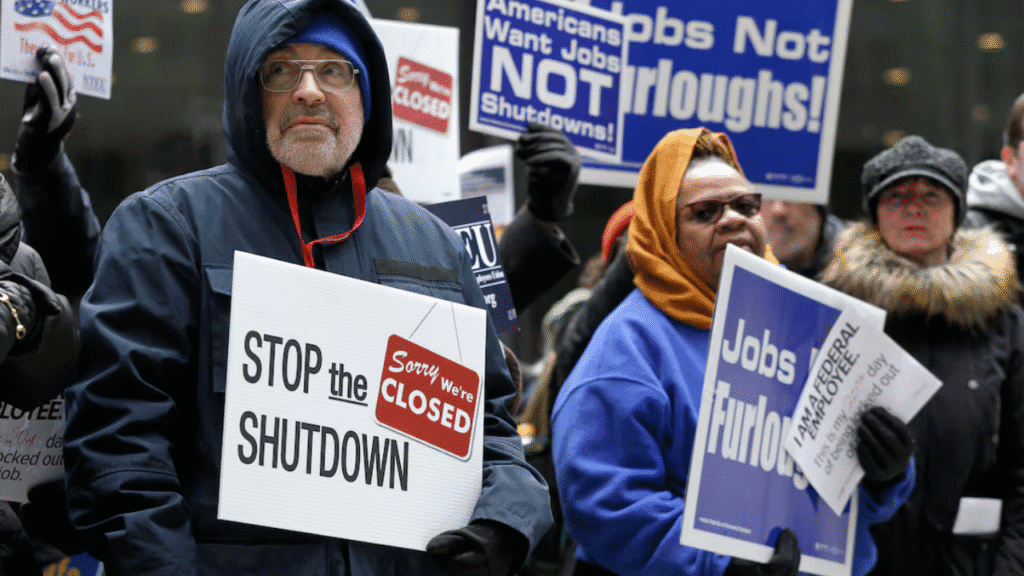
As the government shutdown stretches into its second month, hundreds of thousands of federal employees are either furloughed or working without pay, intensifying financial hardship and uncertainty for families across the country.

Impact on Federal Employees
Roughly 730,000 federal workers—about 32 percent of the workforce—are working without pay, while approximately 670,000 are furloughed with no compensation and no clear return date. Missed paychecks are now piling up, forcing many to tap into savings, delay bills, or seek new employment. Some agencies are preparing for formal layoffs, making the prospect of permanent job loss a real threat as the shutdown continues.
Disrupted Services and Economic Toll
The shutdown has stalled a wide spectrum of public services, including food assistance, clinical trials, business permitting, Medicare and Medicaid payments, air traffic control, and national park operations. Food banks across the U.S. are facing a spike in demand from unpaid federal employees in need, and TSA staff shortages are causing lengthier wait times and travel headaches at airports.
Ripple Effects for Communities
Beyond direct workers, the shutdown is hitting contractors, small businesses near federal facilities, and entire sectors such as hospitality and tourism, which have lost more than $2 billion since early October. Experts now estimate the overall economic cost at over $600 million per day. While some furloughed employees may receive back pay after the shutdown ends, President Trump has indicated he may block such payments, adding further anxiety for government families.
What’s Next
Unions have staged demonstrations nationwide, emphasizing the rising desperation among federal workers and the urgent need for political resolution. If the shutdown persists through December, up to 4.5 million civilian paychecks could be withheld, totalling nearly $21 billion in lost income—an unprecedented disruption to government and everyday American life.