

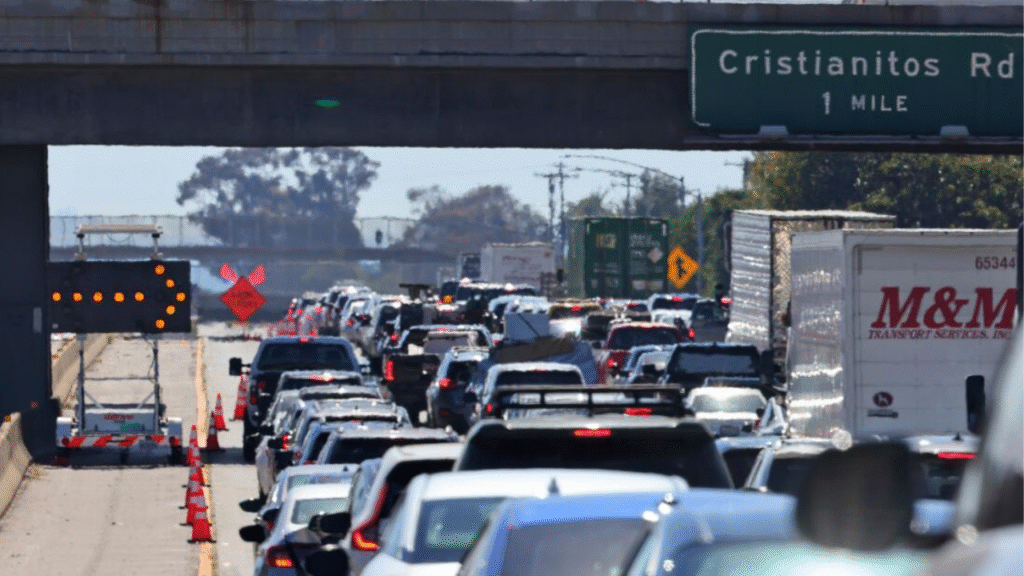
A major stretch of Interstate 5 near Camp Pendleton was closed for several hours on Saturday, causing significant traffic disruptions and halting rail service as the U.S. Marine Corps celebrated its 250th anniversary with a live-fire demonstration. The shutdown, affecting 17 miles between Oceanside and San Clemente, was ordered by California Highway Patrol at the request of federal officials to ensure safety while live ammunition was discharged over the busy freeway.

Unprecedented Local Impact
With more than 80,000 vehicles and $94 million in freight passing through daily, the closure upended travel and logistics for Southern California residents and businesses. Travelers arriving from San Diego, Orange, and Los Angeles counties had to reroute via Interstate 15 and State Route 91, turning what would normally be a 23-minute trip into a drive that could last over two hours. Amtrak and Metrolink suspended rail service during the exercise, leaving many with few transit alternatives.
Community Reactions and Safety Concerns
Confusion and mixed messages preceded the event, as local and state officials scrambled to install “Overhead fire in progress” signage just hours before closure. Some motorists were surprised and frustrated, while others paused to watch military helicopters and aircraft in action. “It was fun to watch, but not fun to be in the traffic,” said one driver caught in the jam.
Official Statements
Governor Gavin Newsom’s office and the Marine Corps confirmed the closure was necessary for public safety, given the risks posed by overhead artillery fire. The event drew thousands of spectators, including the Vice President and senior defense leaders, marking a milestone for the Marine Corps and a rare regional transportation challenge for California.
When Will It Reopen?
Officials anticipated reopening the freeway by 3 p.m., once live-fire activities concluded and the area was secured. Motorists and rail travelers were encouraged to check official channels for updates before returning to their regular routes. The event served as a remarkable example of how national military celebrations can temporarily reshape local life in Southern California.