
The Supreme Court is weighing the legality of former President Donald Trump’s aggressive use of tariffs under emergency powers—a case with far-reaching implications for trade, presidential authority, and the U.S. economy. During nearly three hours of oral arguments, conservative and liberal justices alike expressed skepticism about Trump’s sweeping tariff strategy, which was implemented under the 1977 International Emergency Economic Powers Act (IEEPA) and has affected hundreds of goods across numerous countries.
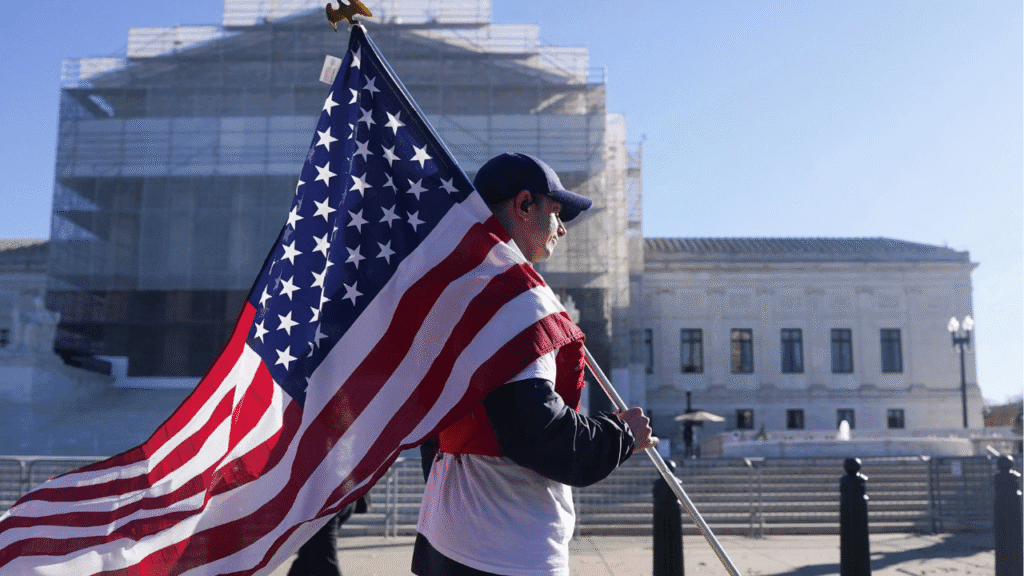
Trump’s Tariff Policies Face Tough Scrutiny
At the center of the case is whether the president can unilaterally impose tariffs on foreign goods by citing national emergencies, without direct Congressional approval. Lower courts previously ruled that Trump exceeded his authority, deeming his use of IEEPA to levy tariffs as “ultra vires”—beyond the permissible scope. The Supreme Court’s justices, including Amy Coney Barrett and John Roberts, questioned whether the tariffs were truly about national security or simply about economic policy, with Roberts noting that tariffs act as taxes, a power historically reserved for Congress.
Trump’s legal team argued the tariffs were valid tools of foreign policy—meant to protect America’s interests and combat threats like illicit drug trade. However, the government’s own brief quoted Trump’s public boasts about raising “trillions” for the country via tariffs, complicating their position by framing tariffs as revenue rather than regulation—a potential legal risk that could sway the justices’ decision.
High Stakes for Business and Politics
If the Supreme Court rules against Trump, tariffs could be struck down and billions in refunds may be demanded by importers—an outcome that would impact U.S. businesses, global supply chains, and consumer prices. On the other hand, a decision in Trump’s favor would affirm a broad interpretation of presidential emergency powers, granting future administrations more leeway in trade policy.
Legal analysts and trade experts are watching closely: the justices’ outcome will likely influence how American presidents can act unilaterally in economic crises—and whether this balance of power remains in check by Congress. A decision is expected in the coming weeks, with significant consequences for trade relationships and the limits of presidentialial authority.