
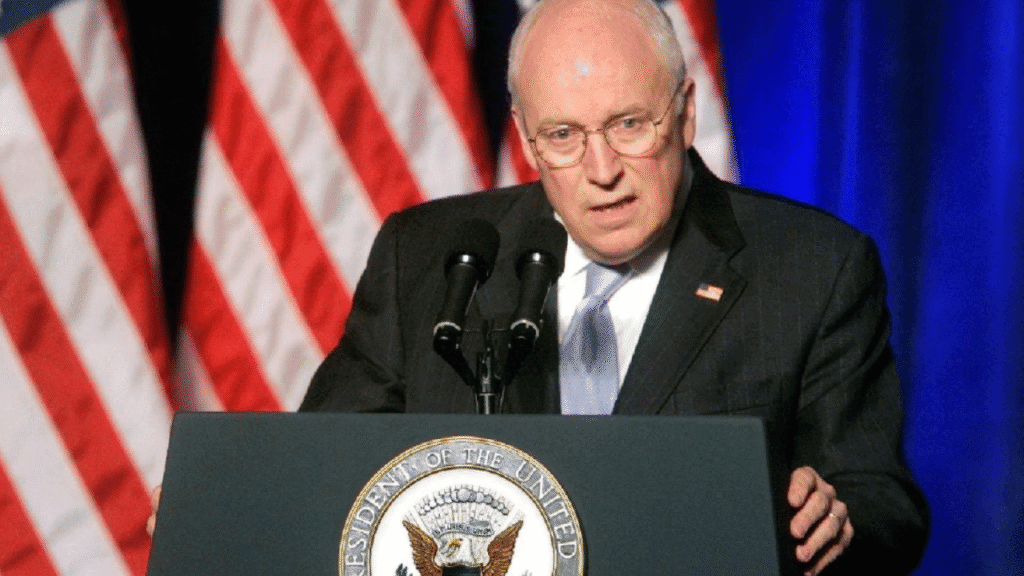
Dick Cheney, often remembered as one of America’s most powerful and controversial vice presidents, is increasingly credited as the “godfather” of the Trump presidency due to his decades-long campaign to expand presidential power. Cheney’s conservative vision for a stronger, less constrained executive office laid the groundwork for many of the tools and doctrines Donald Trump later exploited—reshaping the balance of power in Washington in a hard-right direction.
Cheney’s Expansive Power Legacy
In the aftermath of Watergate and Vietnam, Cheney argued that Congress had overreacted by curbing executive authority. Through key roles in the Nixon, Ford, and especially the Bush administrations, he pushed the “unitary executive” theory—a belief in near-total presidential control over the executive branch, often sidelining Congressional and judicial oversight. As vice president for George W. Bush, Cheney enabled expanded surveillance, secrecy, and aggressive war powers, making the presidency more autonomous and resistant to checks and balances.
Trump’s Adoption of Cheney’s Tools
Though Cheney and Trump later became political adversaries—with Cheney ultimately condemning Trump’s post-2020 election conduct—the mechanics of Trump’s “imperial presidency” are a direct extension of Cheney’s efforts. Trump invoked national emergencies, exercised immunity from prosecution in legal battles, and used the government’s machinery to punish opponents—all following Cheney’s template of presidential supremacy.
Many legal experts trace the Supreme Court’s recent decisions on executive authority—allowing for broad presidential immunity and staff removals regardless of Congressional protections—directly back to Cheney’s influence. Republican-appointed justices have codified much of Cheney’s worldview, enabling presidents to dominate federal policy and personnel well beyond previous norms.
A Lasting, Controversial Impact
While Cheney eventually rebuked Trump’s disregard for constitutional limits, he shares responsibility for paving the way. As presidential historian Timothy Naftali remarked, “Dick Cheney was a proponent of a powerful presidency. Unfortunately, he lived to see the dark side of that policy when someone uses the office for personal rather than national interests”. Cheney’s legacy remains sharply debated as Americans consider the lasting consequences of his vision for executive power in the era of Trump.