
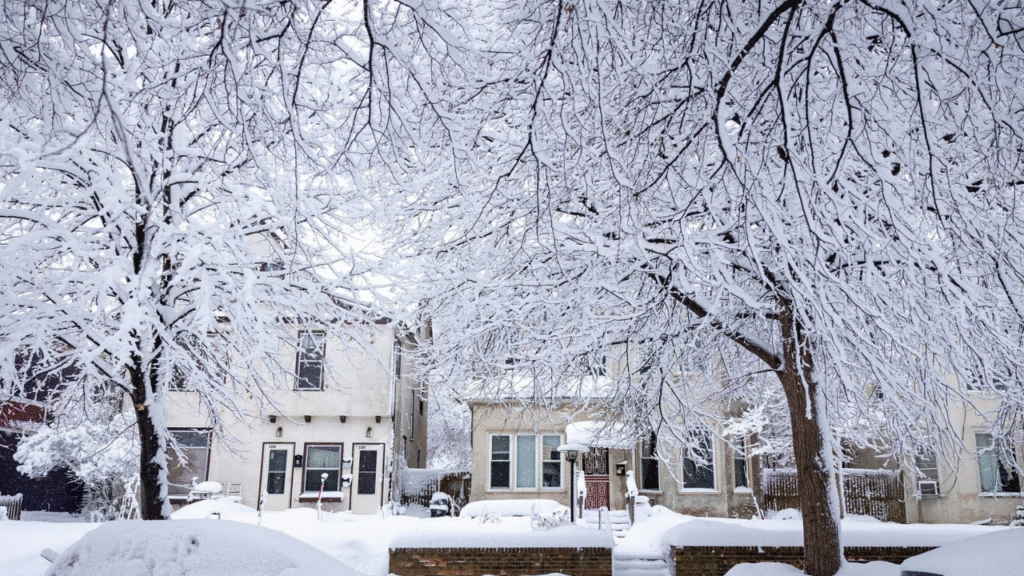
Minnesota’s first major winter storm of the season dropped a wide range of snow totals across the state, with the heaviest bands piling up in central and northern Minnesota and lighter amounts in and around the Twin Cities. While most of the metro woke up to just a few inches, some communities farther north ended up shoveling close to or above the 10‑inch mark.
Who saw the most snow
Preliminary reports from the National Weather Service and local TV stations show that Duluth and nearby communities along the North Shore and into north‑central Minnesota were among the hardest hit. Duluth International Airport measured just over 10 inches, with nearby Taft and Gowan also reporting close to 10 inches as the storm’s snow band parked over the region.
Northwestern Wisconsin, just across the border from Duluth and Superior, actually came in with some of the very highest totals. Hawthorne, Wisconsin, led early reports with around 14 inches of snow, showing how the same storm delivered a stronger punch as it crossed into Wisconsin’s lake‑enhanced snow belt.
Twin Cities and central Minnesota totals
In the Twin Cities, the snow was more modest but still enough to coat roads and lawns ahead of Thanksgiving travel. Minneapolis–St. Paul International Airport reported around 3 inches, with most metro locations in a 1.5‑ to 5‑inch range depending on elevation and localized bands.
Central Minnesota cities such as St. Cloud and Brainerd landed in the middle of the pack, with roughly 3 to 8 inches recorded as the storm slid east. Forecasters had flagged this corridor from Alexandria through the Brainerd Lakes area into northwestern Wisconsin as a likely bull’s‑eye for 5 to 8‑plus inches, which lined up closely with the observed totals.
Travel and Thanksgiving impacts
The storm arrived just as one of the busiest travel periods of the year was ramping up, creating slick roads and pockets of reduced visibility on major routes across Minnesota and into Wisconsin. State transportation crews worked through the night treating and plowing highways, while meteorologists warned that blowing and drifting snow could remain an issue even after the heaviest bands moved out.
Air travel in and out of Minneapolis–St. Paul saw some delays, but officials noted that the airport’s snow total was manageable compared with past Thanksgiving storms. With colder air locking in behind the system, residents were urged to watch for refreeze on sidewalks and secondary roads, especially as families head out for holiday gatherings.